ΓΡΑΦΑΙ — Writing
The Attic Greek blog.
Essays on the language and the literature it carries — what the original text says that translations cannot, and how to begin reading it yourself.
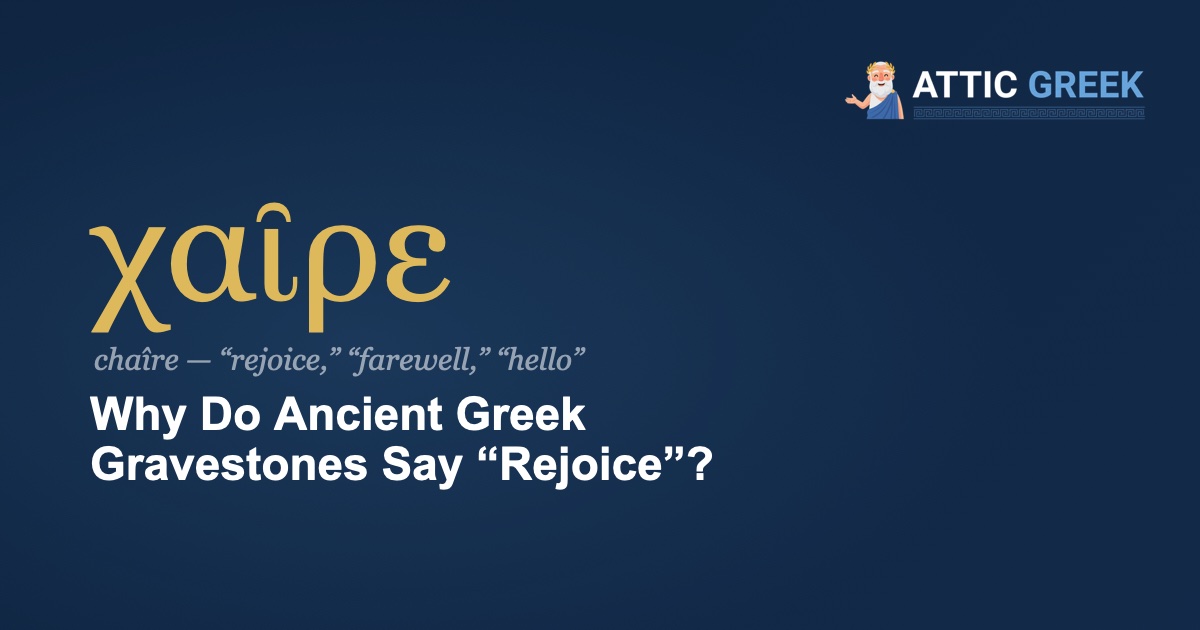
Why Do Ancient Greek Gravestones Say “Rejoice”?
One five-letter word, χαῖρε, was the first thing an ancient Greek said to you and the last. From Nausicaa and Odysseus to the death of Socrates to the roads of Athens, why a word for gladness ended up on graves.
Read the article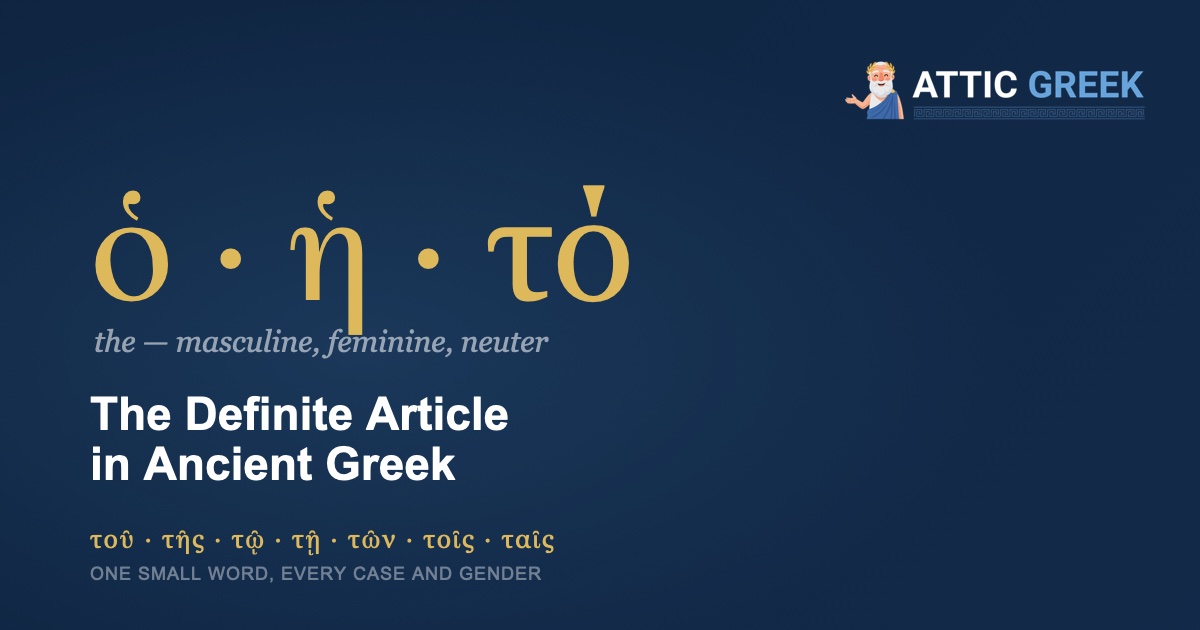
The Ancient Greek Definite Article: ὁ, ἡ, τό Explained
English has one word for “the.” Ancient Greek has a whole family of them, no word for “a,” and a word-order rule that changes what a sentence means. The full table and the accent trap beginners miss.
Read the article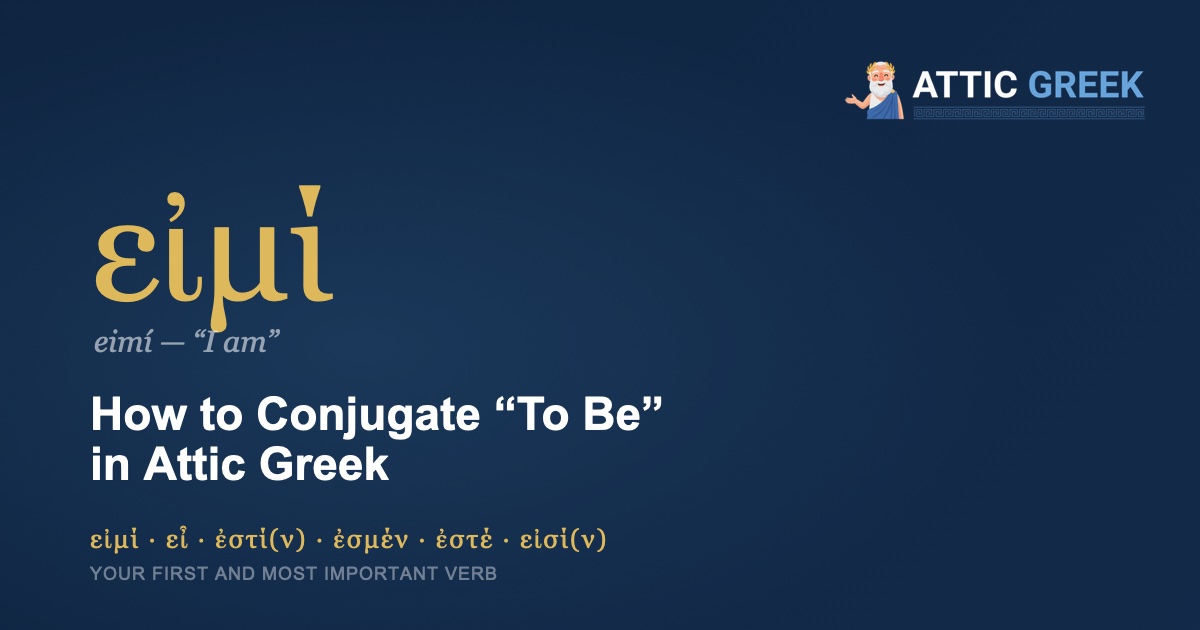
How to Conjugate "To Be" (εἰμί) in Attic Greek
εἰμί is one of the strangest, most irregular verbs in Attic Greek — and that's not a flaw, it's a sign of how essential it's always been. Full present, imperfect, and future tables.
Read the article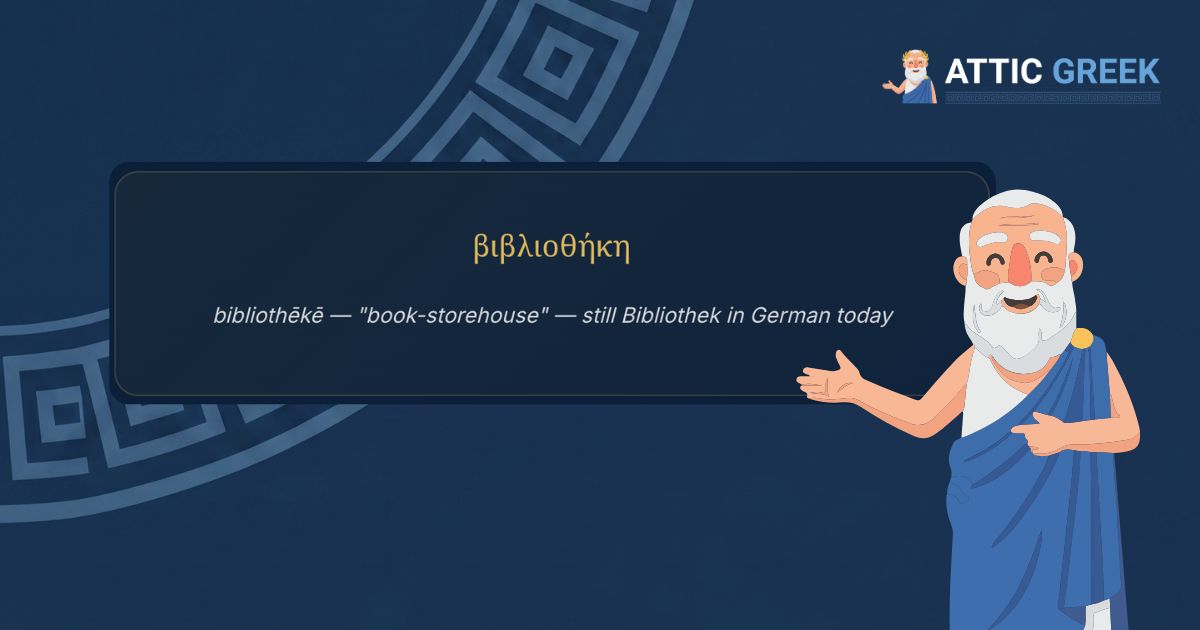
Ancient Greek Words Hiding Inside the German Language
Philosophie, Bibliothek, Apotheke — Ancient Greek quietly shaped German more than most speakers realize, and in a couple of cases, kept it even closer than English did.
Read the article
Why Lemnos Belongs to Hephaestus, God of Fire
Homer names the island directly: this is where the god of fire fell from Olympus and was nursed back to strength. The real volcanic rock beneath the myth, and why the word “volcano” isn't actually Greek.
Read the article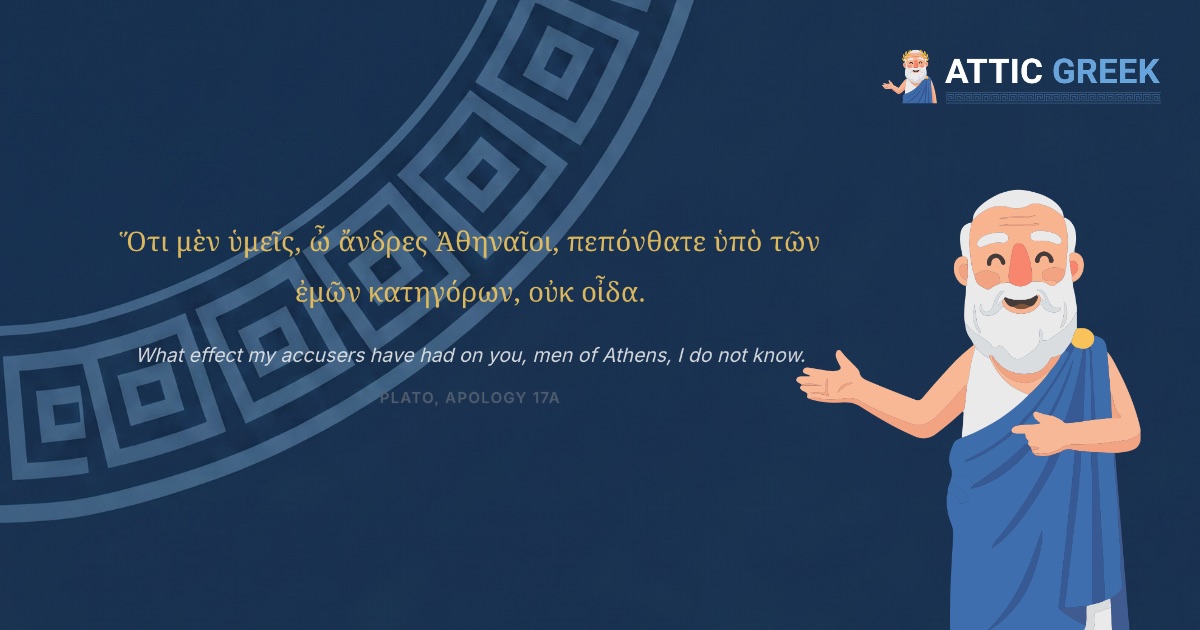
Attic Greek vs Koine Greek: Which to Learn First?
"Ancient Greek" is not one language — it's a family of dialects spread across a thousand years. Here's what actually separates Plato's Attic from the New Testament's Koine, and how to decide which one opens the right door for you.
Read the article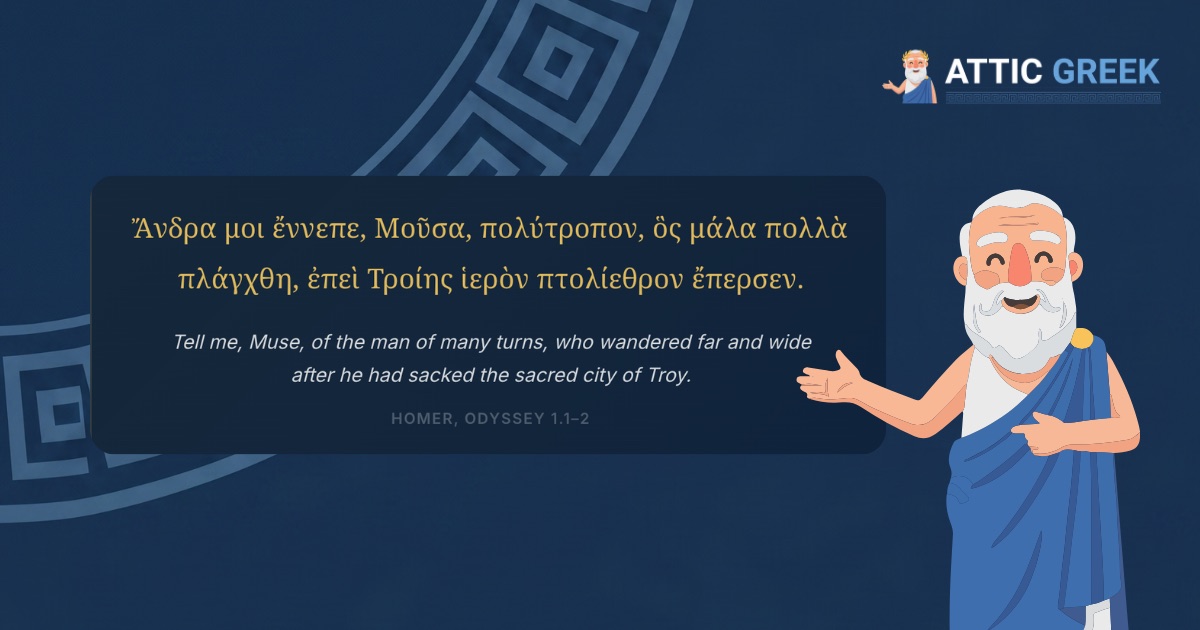
Why Learn Ancient Greek? Start With Homer's Odyssey
Three thousand years ago, a poet began a story with a single request to the goddess of memory. The first word of the Odyssey — and one almost untranslatable adjective — show exactly what translation quietly costs you, and why reading Homer in the original changes everything.
Read the article